Pneumatic Compression
Improve blood flow and lymphatic circulation for faster recovery of hard working muscles
The Technology
Pneumatic compression technology involves the use of compression that is designed for recovery and/or rehabilitation.
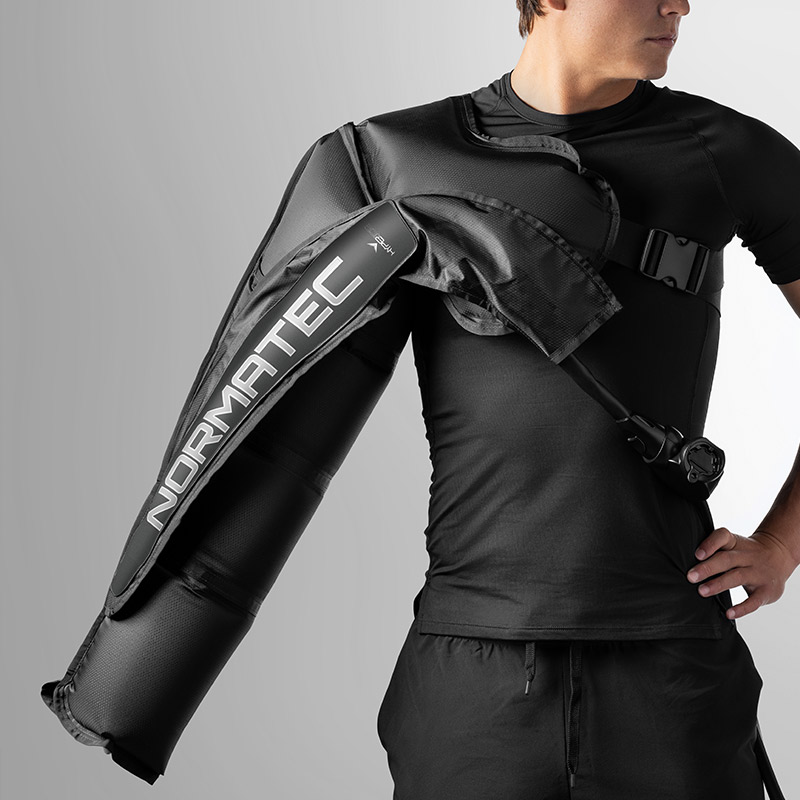
It uses boots or sleeves with multiple cells which are rhythmically inflated and deflated. This rapidly improves circulation and facilitates the removal of waste products, inflammation, and swelling.
This improved circulation has been shown to improve range of motion, lower pain, and trigger cellular recovery.
https://www.youtube.com/watch?v=9uOETcuFjbE
What to expect
You’ll wear a set of arm, leg, or lower body sleeves depending on the target for recovery.
Once comfortable, a moderate initial pressure level will be set. Then the sleeves will gradually be inflated working from the cells farthest from the body.
Over ~30 minutes, they will be sequentially inflated and deflated to create a “pumping” effect. Subsequently, excess fluid and waste products are forced out of the muscles.
The pressure can be adjusted up or down to find the right comfort level for every individual.

Who Should Do Pneumatic Compression Therapy?
Anyone that uses their legs a lot. For activities like running, cycling, skating, football, and CrossFit it will help them recover faster.
Plus, for anyone who doesn’t move enough during the day because they are sitting for hours working, its great to increase circulation and its also a great relaxing massage!
When Should I DO Pneumatic Compression Therapy?
First of all, it works well after any intense activity to aid recovery. So you can do it right after the workout, a few hours later, or even the next day.
Additionally, we’ve also found it a good way to prepare for a hard training session or competition. It helps alleviate heavy legs and gets you ready to go!
Who Shouldn’t Do Pneumatic Compression Therapy?
We don’t recommend using pneumatic compression when you have any of the following conditions:
- Acute pulmonary edema
- Acute thrombophlebitis
- Acute congestive cardiac failure
- Acute infections
- Deep vein thrombosis (DVT)
- Episodes of pulmonary embolism
- Wounds, lesions, infection, or tumors at or near the site of application
- Where increased venous and lymphatic return is undesirable
- Bone fractures or dislocations at or near the site of application