

Guest post from Velocity Sports Performance
Are you a hardcore athlete yearning to hit the field, track, or court again after a pesky hamstring injury? We’ve got your back (and hamstrings)!
It’s time to turn your setback into a heroic comeback. With the right game plan and determination, you’ll be sprinting toward victory in no time.
In this guide, we’ll equip you with a toolkit for returning to sport after a hamstring injury. So, lace up your sneakers and let’s embark on this exciting journey!
The Road to Recovery: Preparing for the Comeback
The road to glory starts with healing the hamstring. Before diving into action, ensure you have the green light from a sports physician or physical therapist. With the injury phase behind you, it’s time to focus on reclaiming your athletic skills.
And this means a lot more than just resting until it heals and going back to sport. Inadequate and incomplete rehabilitation is considered a major risk factor and why previous hamstring strain is the largest risk factor for future strains (Tokutake 2018).
Rebuilding Tissue and Restoring Length: Flexible and Strong
One of the most critical aspects of returning to sport after a hamstring injury is ensuring the hamstring muscles are both flexible and strong.
Rebuilding damaged tissue and restoring optimal length are essential for regaining full function and preventing future injuries.
Here’s why focusing on these aspects is vital for your triumphant comeback:
Rebuilding Tissue: Healing for Resilience
When a hamstring injury occurs, it often results in damage to the muscle fibers and surrounding connective tissues.
These tissues need time to heal properly and regain their resilience. Engaging in controlled and progressive exercises is key to promoting healing while minimizing the risk of re-injury.

Example Exercises:
- Isometric Contractions: Perform isometric hamstring contractions by placing your foot on a stable surface and gently pushing down against it for a few seconds. Isometric exercises stimulate the healing process without putting excessive strain on the muscles.
- Eccentric Hamstring Curls: Lower the leg slowly during a hamstring curl, focusing on the lengthening phase. Eccentric exercises help rebuild tissue strength while reducing the risk of excessive tension on the muscles.
Restoring Length: Flexibility for Optimal Function
Following a hamstring injury, scar tissue may form, leading to decreased muscle flexibility. Not only that, but the tissue quality can be degraded leading to a loss of tissue pliability.
Restoring optimal muscle pliability is crucial for improving overall function, preventing compensatory movements, and reducing the risk of future injuries.
Example Exercises:
- Active Stretching: Engage in active hamstring stretching by lying on your back, raising one leg, and gently pulling it towards your chest. Active stretches help lengthen the muscles while promoting blood flow to the area.
- Dynamic Lunges: Incorporate dynamic lunges, emphasizing a deep stretch in the hamstrings, as part of your warm-up routine. Dynamic stretching prepares the muscles for more intense movements while gradually increasing their flexibility.

Strengthening the Posterior Chain and Core: Powerhouse Players
Unlocking your full athletic potential after a hamstring injury requires tapping into the strength of your posterior chain and core.
These powerhouse players play a vital role in sprinting, jumping, and overall sports performance. Here’s why focusing on these muscle groups is crucial for your triumphant return:
Strengthening the Posterior Chain: Engine of Power
The posterior chain, consists of the facia and msucles of the calves, hamstrings, glutes, and lower back. They are responsible for generating power during explosive movements like sprinting and jumping.
By strengthening these muscles, you’ll enhance your ability to accelerate, decelerate, and change direction effectively.
You’ll also make sure your every part of the chain is contributing and not forcing to much load on just the hamstrings.
Example Exercises:
- Romanian Deadlifts: This classic exercise targets the hamstrings and glutes, promoting strength and stability in the posterior chain. Keep your back straight, and hinge at the hips while lowering the weights down your shins.
- Kettlebell Swings: A dynamic exercise that engages the hamstrings and glutes through explosive hip extension. Hinge at the hips and use the force generated by your hips to swing the kettlebell forward.
- Back Extensions: Targeting the lower back muscles, back extensions strengthen the erector spinae, promoting stability and preventing lower back injuries.
Core and Pelvic Stability: The Epicenter of Performance
A strong and stable core is the epicenter of athletic performance. It provides a solid foundation for efficient movement and transfers power from the lower body to the upper body and vice versa.
Moreover, a stable pelvis is crucial for optimal biomechanics during dynamic movements. If your pelvis is shifting out of control in sprinting and sports movements, excessive stress can be placed on your hamstrings.
Example Exercises:
- Planks Variations: Planks are a classic core exercise that targets the entire core, including the rectus abdominis, obliques, and transverse abdominis. Try plank variations like side planks and plank with leg lifts for a more challenging workout.
- Glute Bridges with Marching: By lifting one foot off the ground during a glute bridge, you challenge pelvic stability while activating the hip abductors. This exercise helps address any imbalances and ensures proper alignment during movement.
- Russian Twists: This rotational core exercise engages the obliques and transverse abdominis. Use a medicine ball or weight to increase the intensity.
Remember, consistency and proper form are key. Gradually increase the intensity of your workouts, and don’t forget to allow for adequate rest and recovery. By focusing on strengthening the posterior chain and core, you’ll lay a strong foundation for your triumphant return to sport and a future filled with athletic excellence.

Incorporating Speed and Agility: The Need for Speed
Speed and agility are the bread and butter of athletic performance, and mastering these skills is essential for a triumphant return to sport after a hamstring injury.
By incorporating speed-specific drills and plyometric exercises into your training, you’ll elevate your game and leave your competitors in the dust.
The Demands of Full-Speed Sprinting on Hamstring Muscles
Sprinting at full speed places some of the highest demands on the muscles of the body, particularly the hamstrings. (Learn more about the science of speed mechanics here)These powerful muscles are crucial for propelling the body forward during explosive movements, such as sprinting.
However, it’s important to understand that while various exercises and drills can help prepare the hamstrings, nothing fully replicates the intensity and stress that sprinting at top speed places on these muscles.
During a full-speed sprint, the hamstrings undergo rapid and forceful contractions to propel the body forward with maximum velocity.
They are responsible for extending the hip and flexing the knee, generating the necessary power to cover ground rapidly.
Additionally, the hamstrings play a vital role in deceleration, eccentrically controlling the leg’s forward motion during the swing phase to prepare for the next stride.
Without specific exposure to full-speed sprints, the hamstrings may not be fully prepared for the explosive power and high-intensity efforts required during competition.
Incorporating full-speed sprinting into your training regimen, under the guidance of a skilled coach or physical therapist, can help bridge the gap between strength training and on-field performance.
Mastering Speed: Ignite Your Explosive Power
In sports, speed is often the difference between victory and defeat.
Speed drills help you maximize your acceleration, top-end speed, and agility, ensuring you’re always one step ahead of the game.
Example Sprint Drills:
- A-Skips: This drill focuses on proper knee drive and foot dorsiflexion, training your body to maintain an upright posture and develop powerful strides.
- Dribbles: Quick, short strides performed at high frequency, mimicking the fast turnover needed for rapid acceleration.
- Fast Leg Drills: Rapidly alternating high knee lifts with each step, enhancing hip flexor strength and improving stride frequency.
Posterior Focused Speed Drills: Restoring Hamstring Function For Sprinting
When it comes to speed, your posterior chain muscles play a starring role and the hamstrings need to be ready.
Strengthening and activating these muscles in specific drills will not only optimize your sprinting performance but also reduce the risk of future hamstring injuries.
Example Posterior Speed Drills:
- Straight Leg Gallops: Pull forward with exaggerated strides, focusing on extending the hip backward with each step. This drill targets the hamstrings and glutes for the high speed contractions in sprinting mechanics.
- Straight Leg Shuffles: Maintain a straight leg during forward shuffles, engaging the glutes and hamstrings to pull back at the ground explosively.
- Straight Leg Sprints and Bounds: Emphasize hip flexion and pulling backwards during sprints and bounds, engaging the posterior chain for maximum power output. For runs you focus on speed and for bounds you focus on getting long strides with more air time.
- Proper Butt Kick/Thigh Pop Exercises: Execute a “butt kick” action, emphasizing pulling the heel under the glute, while focusing on bringing the thigh parallel to the ground. These drills reinforce the importance of proper hip extension in sprinting.
Gradual Progression to Full-Speed Sprinting: Patience Pays Off
As you approach the pinnacle of your return-to-sport journey, gradual progression becomes the key to unlocking your full potential.
While you may be eager to unleash your full speed, it’s essential to approach it with patience and a well-structured plan.
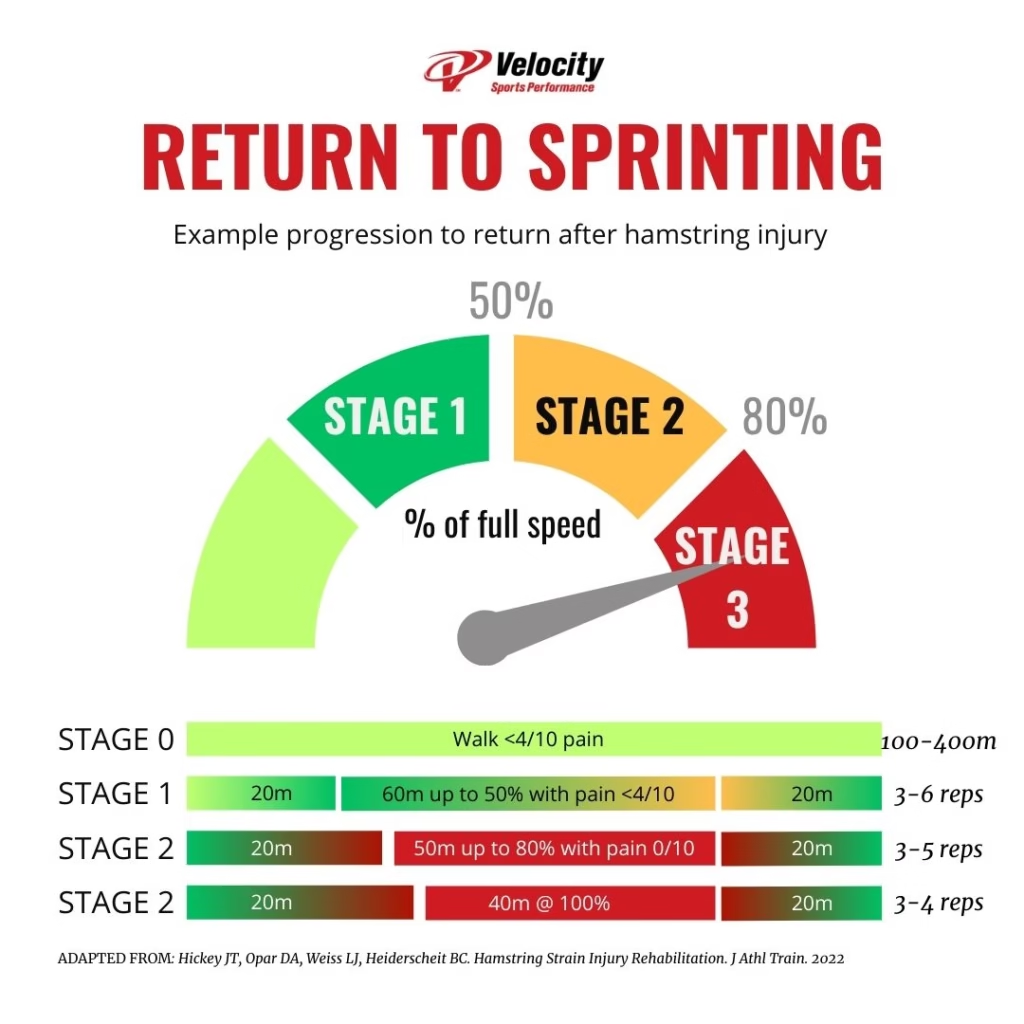
Why Gradual Progression Matters After Hamstring Injury
Gradual progression allows your body to adapt and build resilience to the demands of full-speed sprinting.
By respecting the healing process and respecting the guidelines set by your physical therapist, you’ll mitigate the risk of re-injury and lay a solid foundation for long-term success.
Studies have shown that a progressive return-to-sport program leads to better outcomes, reducing the risk of re-injury and promoting a smoother transition back to full competition (Ishøi et al., 2018).
Step-by-Step Outline for Gradual Progression
1: Foundation Building
- Start with low-impact exercises, such as stationary cycling or pool workouts, to maintain cardiovascular fitness without excessive stress on the hamstring.
- Engage in gentle static and dynamic stretching to improve flexibility and reduce muscle tension.
2: Low-Speed Drills
- Introduce low-speed drills like jogging, skipping, and ankle dribbles to ease your body back into dynamic movements.
- Continue to focus on core stability and posterior chain activation during these drills.
3: Controlled Acceleration
- Gradually increase your pace with controlled acceleration drills, such as build-up sprints or gradual accelerations over short distances.
- Emphasize proper sprint mechanics and form during these drills.
- During this phase progressively use the posterior chain speed drills to prepare the hamstrings.
4: Sub-Maximal Sprints
- Gradually build to fast calf and knee dribbles.
- Execute sub-maximal sprints at around 60-70% of your maximum effort.
- Pay attention to any signs of discomfort or fatigue and adjust your intensity accordingly.
5: Full-Speed Exposure
- Incorporate full-speed sprints in a controlled environment, such as on a track or field, under the guidance of your physical therapist or coach.
- Begin with shorter distances, such as 20-30 meters, and gradually progress to longer sprints.
- Continue the posterior chain speed drills as part of your warm-up.
Full Speed Sprints in Practice: Prevent Hamstring Strains Through Exposure
Research suggests that incorporating some exposure to full-speed sprints during practice can help prevent hamstring injuries. By gradually integrating high-speed movements into your training regimen, your hamstring muscles adapt and become better equipped to handle the demands of sports competition.
A study published in the Scandinavian Journal of Medicine & Science in Sports found that athletes who performed short, maximal sprints during practice had a lower risk of hamstring injuries compared to those who only trained at sub-maximal intensities (van der Horst et al., 2015).
With a gradual progression plan, you’ll develop the strength, flexibility, and confidence needed to sprint at full speed without fear. Trust the process, believe in your body’s ability to recover, and remember that your journey to greatness is defined by resilience, determination, and patience.
Conclusion: The Epic Triumph
Congratulations, Hamstring Hero! You’ve come a long way on your journey to reclaiming your speed. With determination, dedication, and a strategic plan, you’ve transformed setbacks into stepping stones, turning your hamstring injury into a triumphant comeback story.
As you prepare to step back onto the field, track, or court, remember these key takeaways that have paved the way for your epic triumph:
TL;DR – Your Key Takeaways
- Rebuilding tissue and restoring hamstring length is essential for healing and regaining flexibility.
- Strengthening the posterior chain and core provides a solid foundation for explosive performance and stability.
- Speed drills prepare your hamstrings for the high demands of top-end speed,.
- Gradual progression is crucial for building resilience and minimizing the risk of re-injury.
- Full-speed exposure during practice helps prevent hamstring injuries and prepares you for competition.
Your return to sport after a hamstring injury is not just a mere comeback; it’s a testament to the hero within you.
You’ve navigated the path of resilience, endured the challenges of recovery, and emerged stronger than ever before.
As you sprint towards your goals, remember to cherish each milestone and celebrate your victories along the way. There will likely be frustrations and small setbacks, but that’s part of the stroy.
So, Hamstring Hero, the field awaits you with open arms. Embrace the epic triumph that awaits, and unleash your full potential on your quest for athletic excellence. It’s time to claim your rightful place as a true champion!
Unleash Your Athletic Potential and Rediscover Your Inner Champion!