

Guest post from: Velocity Sports Performance
Sprinting after a hamstring injury can be a challenge.
Rehabilitating a hamstring injury is not just about healing tissue—it’s about restoring high-performance movement while minimizing the risk of reinjury.
For field and court sport athletes, sprinting is often the final hurdle in the return-to-sport journey. But too often, athletes either sprint too soon or not soon enough.
This guide outlines how to progressively rebuild sprint capacity after a hamstring injury, grounded in current research and practitioner insights.
Why Sprinting Matters in Rehab
Hamstring strains are most commonly caused by high-speed running, particularly during the terminal swing phase when the hamstrings are under maximal length and force demands.
Without targeted reconditioning of sprint mechanics, athletes may regain general strength but still be vulnerable during high-speed actions.
A return-to-sport framework that integrates sprinting—rather than delaying it—has been shown to reduce reinjury risk and improve functional outcomes.
Multi-Track Approach: Strength + Speed + Pliability
Effective rehab should follow a dual-track model that develops:
- Hamstring capacity through eccentric and isometric loading (e.g., Nordic curls, RDLs, sliders)
- Sprint mechanics via graded sprint exposure and technical drills
- Improve pliability through the entire posterior chain with myofascial tissue work.
This integrated approach is now the standard for athletes A criteria-based progression, rather than a rigid timeline, should guide decisions.
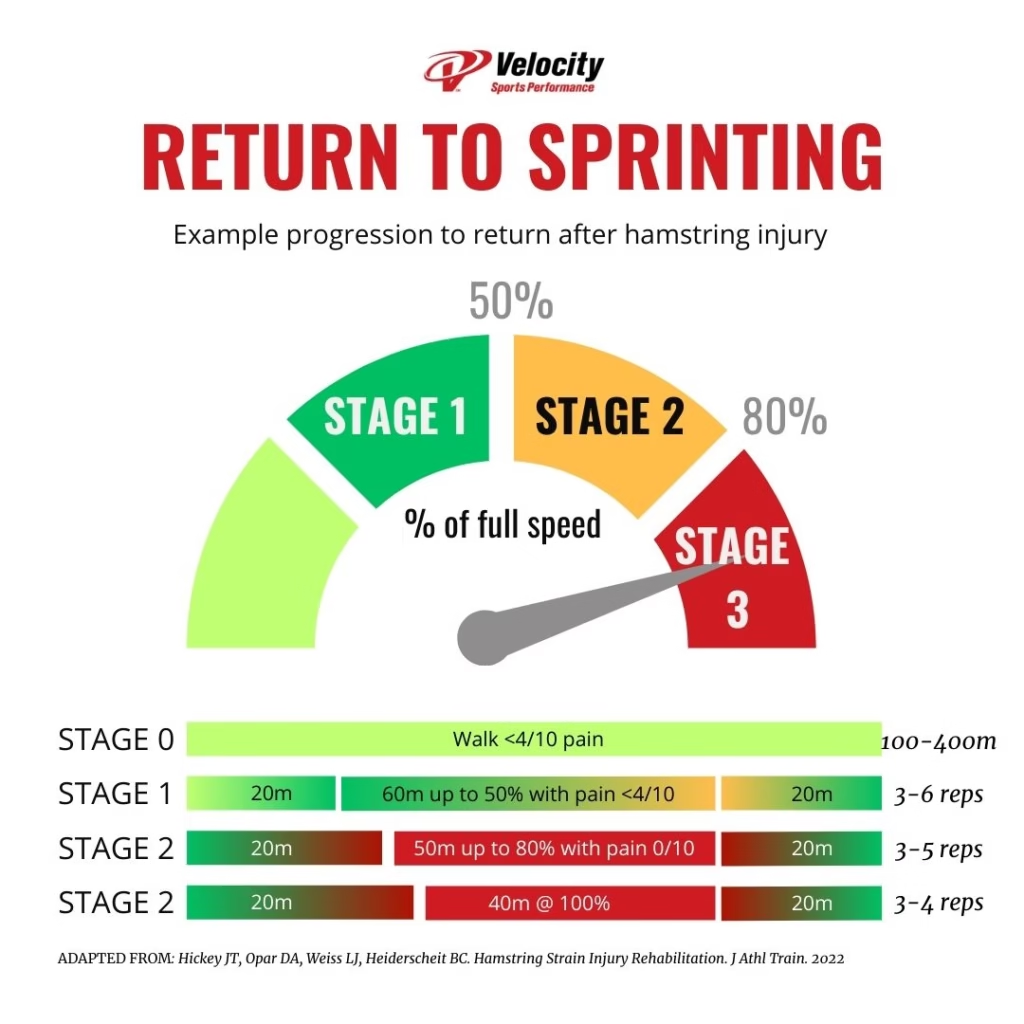
Three Keys to Sprint Progression After Hamstring Strain
- Start early—but not fast
Light, coordinated movements such as straight-leg skips, thigh pops, and step-over runs (dribbles) can begin early to restore rhythm and posture without full speed demands. - Build intensity gradually
Sprint progression should move from 50% to 100% effort in stages, as outlined in Hickey et. al practical protocol. Rushing to maximal speed without earning capacity at submaximal levels is a common reinjury trap. - Use criteria, not time
Athletes should progress when they can sprint pain-free at the current intensity, demonstrate proper mechanics, and meet strength benchmarks (e.g., 90% limb symmetry in isometric or eccentric tests).
What About Tendon or Stretch-Type Injuries?
Athletes recovering from hamstring tendon avulsions or stretch-type strains (often from kicking or overstretching) need slower and more cautious sprint reintroduction.
This also applies to athletes who have had multiple hamstring injuries.
These injuries require more time to build tolerance to lengthened positions and high-speed hip flexion-extension loads.
Final Word On Sprinting After A Hamstring Injury
Sprinting should not be treated as a final fitness test. It is a skill and a capacity that must be rebuilt intentionally.
By layering sprint drills, strength work, and progressive exposures to speed, we not only reduce the chance of reinjury—we rebuild the athlete for sustainable, long-term performance.